Emotional Design for a Food-Delivery Widget
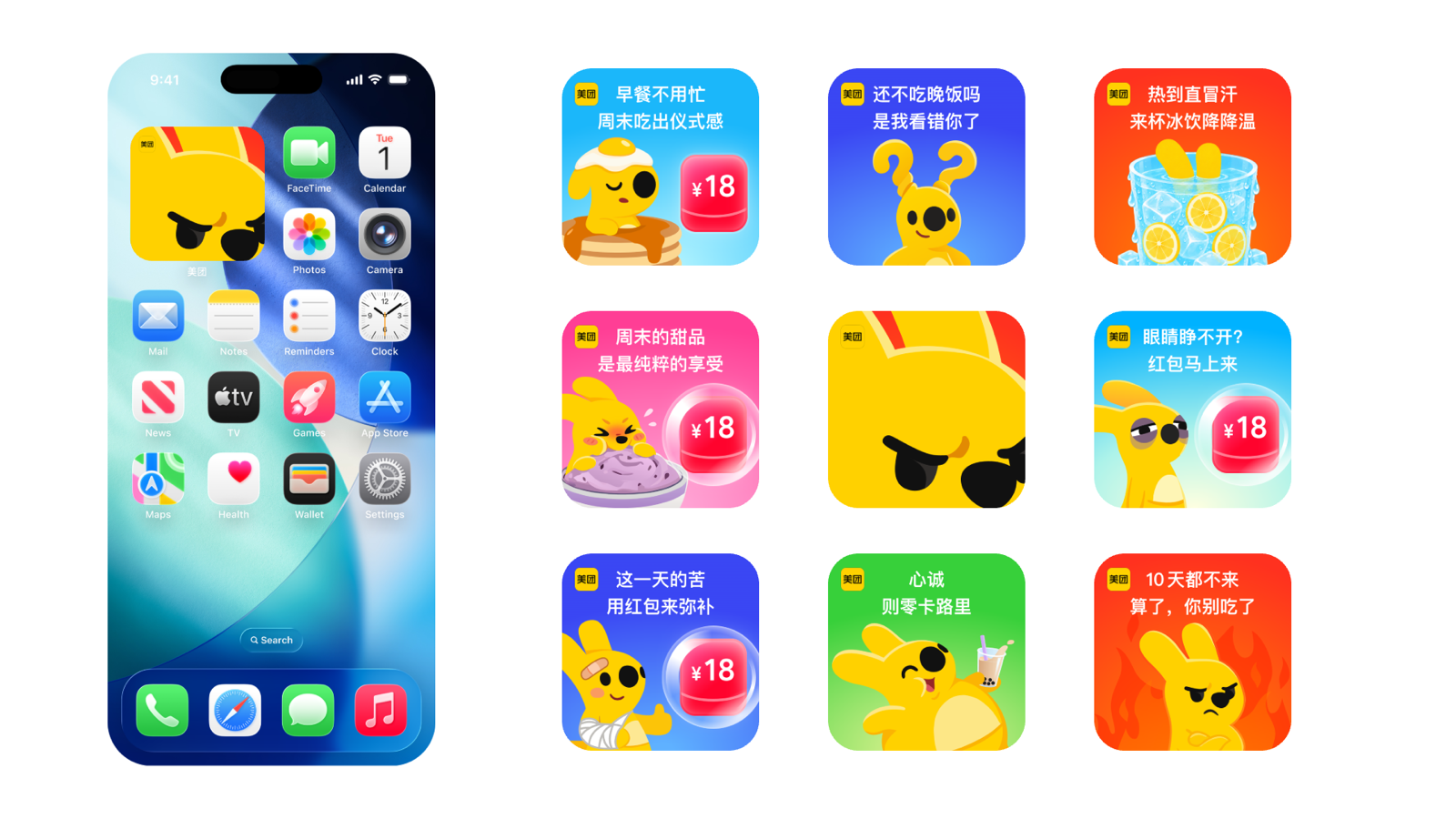
A home-screen widget is a true zero-level entry: it stays visible without the app ever being opened. For a high-frequency service like food delivery, the opportunity is bigger than a shortcut — it is a surface for long-running content. But research also flagged the risk: purely functional or promotional information fatigues quickly, and a fatigued widget gets deleted. The design question became: how can a marketing widget survive on the home screen through emotional content?
From shortcut to an old friend
The design personifies the widget as a trendy, witty, living old friend. The kangaroo mascot is the protagonist of this small card: it has expressions, moods, and states, and it speaks in a caring, teasing, sometimes coquettish tone. The copy never shouts slogans or stacks incentives — it reads like a message from a friend: "A hard week deserves a good meal tonight." "Haven’t seen you in days — how about a bowl of noodles?" The widget shifts from an ad slot pushed onto the home screen into a character that checks in on you.
A content matrix that follows the day
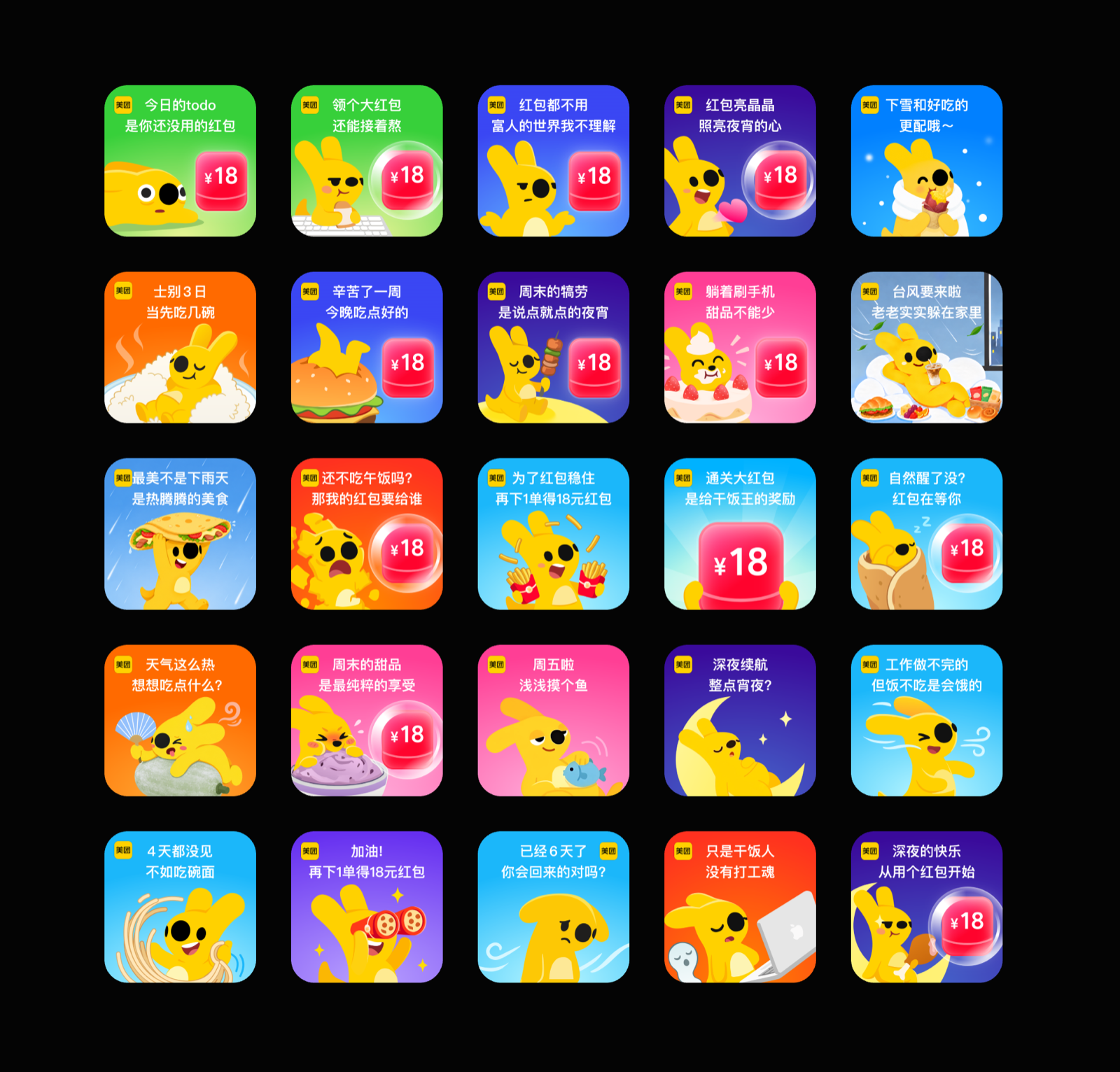
The content system is built around scenes and emotions, growing into dozens of widget states: meal-time nudges, afternoon tea and late-night cravings by time of day; rain, snow, heatwave and typhoon care by weather; streak encouragement, win-back pleas for lapsed users, and unused-coupon reminders by behavior. Each state combines a scene illustration, a witty one-liner, and a soft incentive hook, so the widget says the right thing at the right moment — "The best thing about a rainy day is a steaming hot meal," or on a Friday night, "Late-night happiness starts with a coupon."
Visual language: pop, yet unmistakable
Each card uses a saturated gradient to match its mood — deep blue for late night, hot orange-red for heatwaves, pale blue for snow. The kangaroo fully acts out every scene: soaking in a noodle bowl, lying on the moon, wiping sweat, wrapped in a blanket. The coupon capsule recurs as a visual anchor that carries the incentive. Among a grid of app icons, the widget has to pop instantly while staying unmistakably on-brand.
A cross-brand collaboration
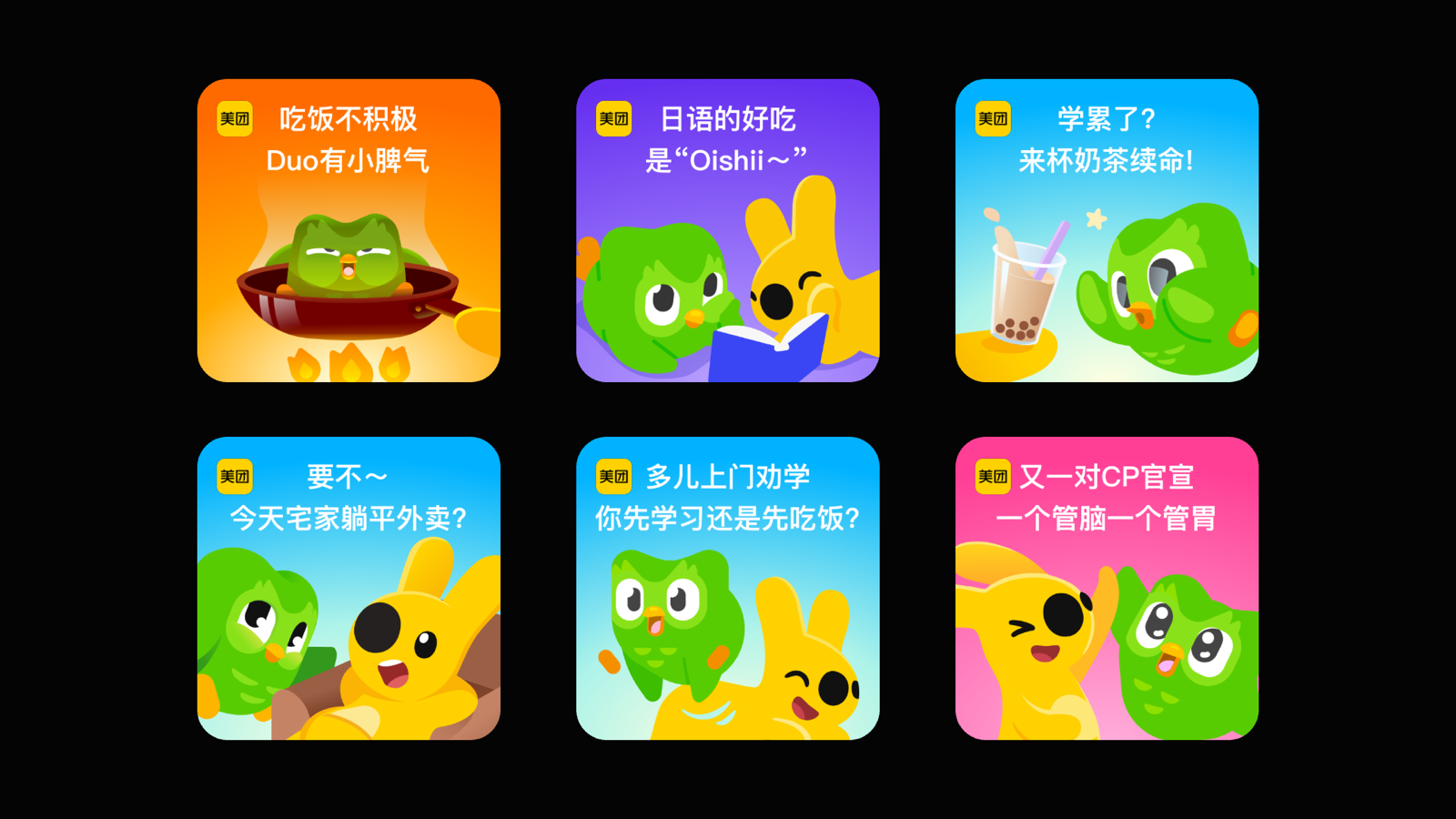
The Duolingo collaboration pushed the emotional design into meme territory: Duo the owl and the kangaroo became an official pair — "one feeds your brain, the other feeds your stomach." The two mascots’ personalities collide on each card: Duo nags you to eat with its signature passive-aggressive temper while the kangaroo plays the caring one. Lines like "Not eating on time? Duo is upset" borrow Duolingo’s native meme culture, giving the widget content organic reach on social platforms.
Reflection
A widget lives by a simple rule: it stays on the home screen only if it is delightful to look at. In this project, emotional design is not decoration — it is the retention mechanism that turns an entry point into companionship. When content follows the rhythm, weather, and mood of the person holding the phone, every glance becomes less an impression and more a greeting.